



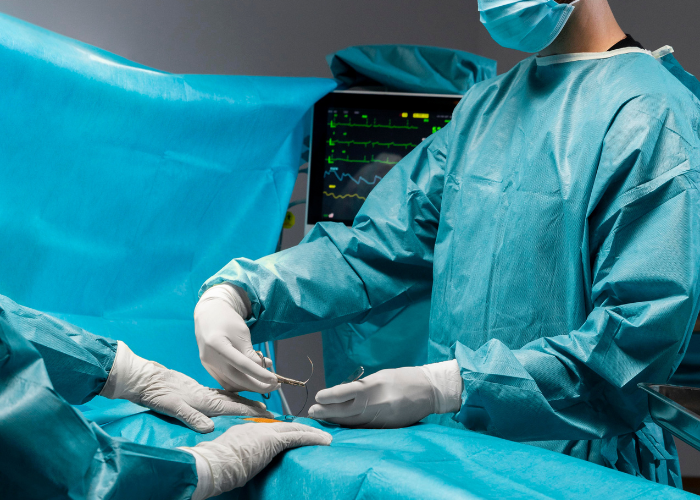
Laparoscopic Surgery
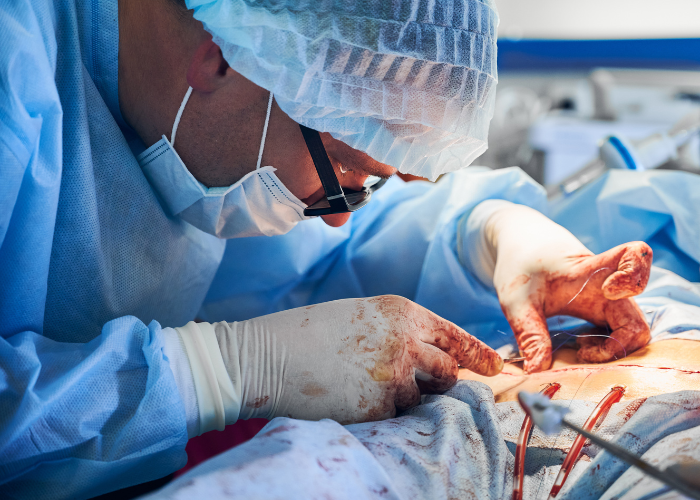
Laparoscopic Surgery, also known as minimally invasive surgery, is an advanced surgical technique performed through small incisions using a high-resolution camera (laparoscope) and specialized surgical instruments. This technique allows surgeons to view internal organs clearly on a monitor and perform precise procedures with minimal tissue damage.
Laparoscopic procedures significantly reduce post-operative pain, blood loss, and complications compared to traditional open surgery. With faster healing, shorter hospital stays, and minimal scarring, laparoscopic surgery has become the preferred choice for many abdominal and general surgical conditions. Our hospital is equipped with modern laparoscopic technology and experienced surgeons to ensure safe, effective, and patient-focused care.
Steps in Laparoscopic Surgery
- Initial Consultation & Diagnosis
- Pre-Operative Evaluation
- Anesthesia Administration
- Small Keyhole Incisions
- Laparoscope (Camera) Insertion
- Clear Internal Visualization
- Precise Surgical Procedure
- Minimal Blood Loss
- Closure of Incisions
- Post-Operative Care & Recovery
Laparoscopic Cholecystectomy
Laparoscopic cholecystectomy is a modern surgical procedure to remove the gallbladder using minimally invasive techniques. Unlike traditional open surgery, this approach uses small incisions, specialized instruments, and a tiny camera called a laparoscope. This allows surgeons to perform the operation with precision while significantly reducing postoperative pain, scarring, and recovery time.
The gallbladder is a small organ located beneath the liver that stores bile, which helps in digestion. Problems arise when gallstones or inflammation obstruct the normal flow of bile, causing severe abdominal pain, nausea, vomiting, and sometimes jaundice. Laparoscopic cholecystectomy effectively treats these conditions by removing the gallbladder before serious complications, such as infection or pancreatitis, develop.
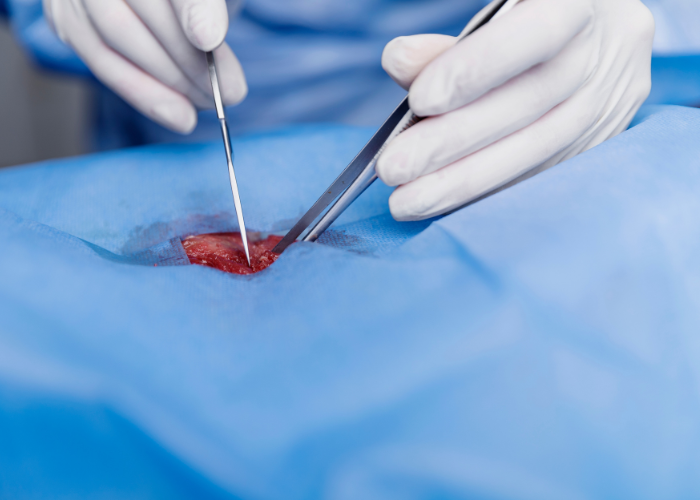
Laparoscopic Appendectomy
Laparoscopic appendectomy is a minimally invasive surgical procedure performed to remove the appendix, a small tube-shaped organ attached to the large intestine. This procedure is most commonly performed in patients with appendicitis, which is the inflammation or infection of the appendix. By using small incisions and specialized instruments, laparoscopic appendectomy allows surgeons to operate with precision while minimizing postoperative pain and promoting faster recovery compared to traditional open surgery.
During the procedure, the patient is placed under general anesthesia. The surgeon makes three small incisions in the abdomen, through which a laparoscope (a small camera) and surgical instruments are inserted. The laparoscope provides a magnified view of the internal organs on a monitor, enabling the surgeon to carefully detach and remove the appendix. The incisions are then closed with sutures or surgical glue, resulting in minimal scarring.
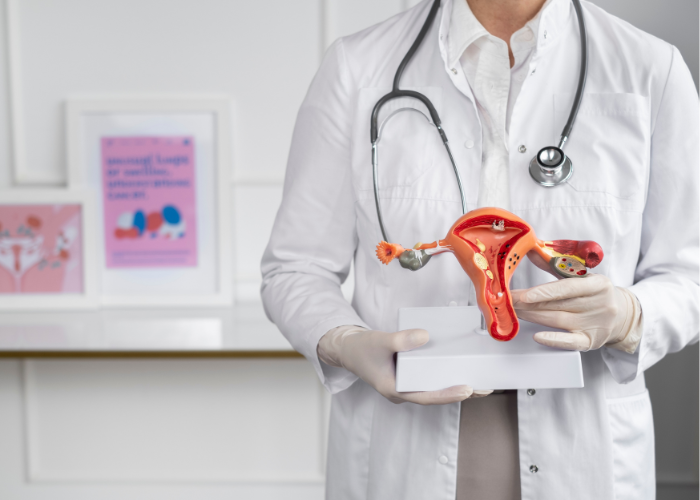
Laparoscopic Hysterectomy
A laparoscopic hysterectomy is a modern, minimally invasive surgical procedure designed to remove the uterus with precision and care. Unlike traditional open surgery, which requires a large abdominal incision, this procedure uses a few small incisions through which a laparoscope — a thin, lighted instrument with a camera — and specialized surgical tools are inserted. The surgeon can clearly view the uterus and surrounding organs on a monitor and perform the operation with minimal disruption to the body.
This technique is commonly recommended for women suffering from conditions such as uterine fibroids, endometriosis, adenomyosis, chronic pelvic pain, abnormal bleeding, uterine prolapse, or certain gynecological cancers. Depending on the patient’s needs, the surgeon may remove the entire uterus, including the cervix, or just the upper portion while leaving the cervix intact. In some cases, the surgery may begin laparoscopically and finish through the vaginal route to ensure optimal results and recovery.
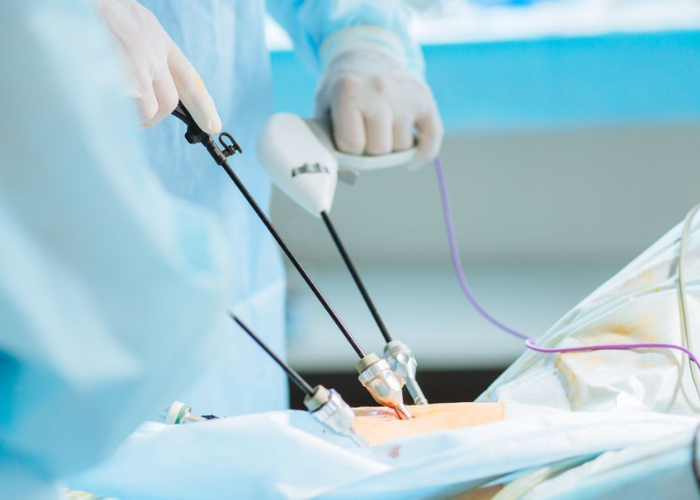
Laparoscopic Hernia Repair
Laparoscopic hernia repair is a minimally invasive surgical procedure designed to treat hernias with greater precision, faster recovery, and minimal discomfort. A hernia occurs when an internal organ, usually part of the intestine or fatty tissue, protrudes through a weak spot in the abdominal wall. Traditional open surgery requires a large incision, but laparoscopic repair is performed through several small incisions using a laparoscope — a thin tube equipped with a camera — and specialized surgical instruments. This allows the surgeon to carefully view and repair the hernia while minimizing damage to surrounding tissues.
During the procedure, the surgeon gently pushes the protruding tissue back into its proper place and reinforces the weakened area, often using a surgical mesh for added strength. The laparoscopic approach allows for precise placement of the mesh, reducing the risk of recurrence. Depending on the hernia’s size and location, the surgeon may choose a transabdominal preperitoneal (TAPP) or totally extraperitoneal (TEP) technique, both of which ensure effective repair while avoiding large incisions.
Umbilical Hernia
An umbilical hernia occurs when a part of the intestine or fatty tissue pushes through a weak spot in the abdominal muscles near the belly button (navel). This condition is most commonly seen in infants, but it can also affect adults, particularly women who have had multiple pregnancies, or individuals who are overweight or have increased abdominal pressure. Umbilical hernias often present as a soft bulge near the navel that may become more noticeable when coughing, straining, or standing.
Patients typically recover quickly, with most returning to normal daily activities within a week, while strenuous activities are avoided for a few weeks. The procedure is safe and effective when performed by an experienced surgical team, and it significantly reduces the chances of hernia recurrence.
Inguinal Hernia
An inguinal hernia occurs when a portion of the intestine or fatty tissue protrudes through a weak spot in the lower abdominal wall or groin area. This type of hernia is more common in men due to natural weaknesses in the inguinal canal. It often appears as a noticeable bulge in the groin or scrotum and may cause discomfort or pain, especially when lifting, bending, coughing, or standing for long periods.
Most patients can return to routine activities within a week, with full recovery occurring over several weeks. The laparoscopic technique also allows for quicker return to work and reduces the likelihood of hernia recurrence, making it a safe and effective option for adult patients.
Available Doctor Under Surgery

Dr.G. Akshitha
MBBS, MS(General Surgery), FMAS, DMAS, FGIE(Delhi)Frequently asked questions
Laparoscopic surgery is a minimally invasive procedure performed using small incisions, a camera, and specialized instruments to treat various medical conditions.
Yes. When performed by experienced surgeons with modern equipment, laparoscopic surgery is very safe and widely used.
Post-operative pain is significantly less compared to open surgery and is usually well controlled with medication.
Recovery is faster than traditional surgery. Many patients resume normal activities within a few days to a couple of weeks.